Why AI Toolboxes Use Categories in the First Place
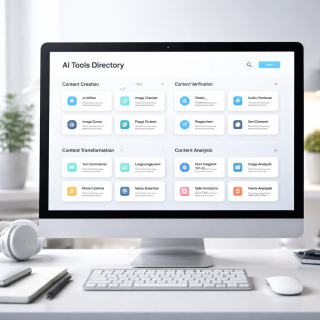
Browsing a list of 200 AI tools by brand name alone is nearly useless. Categories solve that problem. Tool directories group products by what they actually do, so a researcher evaluating plagiarism checkers isn't wading through copywriting assistants, and a content manager comparing rewriting tools isn't buried under sentiment analyzers.
Most toolboxes organize around four practical functions: content creation, content verification, content transformation, and content analysis. Creation covers text generators like Jasper or Copy.ai. Verification covers AI detection systems like Originality.ai. Transformation includes paraphrasers and summarizers. Analysis spans readability scoring, tone detection, and NLP-based classifiers.
The messier reality is that many modern models blur these lines. GPT-4-based tools, for instance, can generate, rewrite, and analyze text in a single session. That's why classification reflects primary use case rather than technical capability. A tool built to detect AI-generated content gets listed under verification, even if it also reports readability scores on the side.
How Writing, Detection, and Rewriting Tools Differ
Three distinct tool categories sit at the center of most AI toolboxes, and conflating them causes real confusion.
AI writing tools generate original text from a prompt. Feed one a brief and it produces a draft email, product description, or blog outline. The output is new content, not a transformation of existing text. Limitations include factual errors, generic phrasing, and no awareness of what's already been published.
Detection tools work in reverse. Systems like GPTZero or Originality.ai take existing text as input and return a probability score estimating whether a human or a model wrote it. They do not rewrite anything. Their accuracy varies significantly depending on the model version, writing style, and whether the text has been lightly edited.
Paraphrasing tools take existing text and restructure it, adjusting tone, wording, or sentence flow while preserving the original meaning. QuillBot is a common example.
Some products market themselves as all three at once. That's worth skepticism. A tool strong at generation is not automatically reliable at detection, and bundling features doesn't mean each one performs well independently.
Where Text Analysis Features Fit in the Ecosystem
Grammar checkers, readability scorers, and tone analyzers occupy a distinct tier in most AI tool directories – not quite writing tools, not detection systems, but something adjacent to both. Platforms like Futurepedia and There's An AI For That typically tag these separately under labels like "editing," "NLP tools," or "content analysis," and there's a practical reason for that.
These features are built to evaluate or refine text rather than generate it. Readability scoring, for instance, measures sentence complexity against standards like Flesch-Kincaid. Keyword extraction uses NLP, meaning natural language processing, to identify statistically significant terms within a document. Summarization condenses long-form content algorithmically. Semantic analysis goes deeper, mapping meaning and context rather than just counting words.
Publishing teams, compliance officers, and academic editors rely on these tools in ways that don't overlap much with AI writers or detectors. Grouping them separately in directories helps users find the right tool for the actual job.
The Best Tool Labels Reflect Real User Goals
Directories earn their usefulness when categories map to what someone actually needs to do, not to whatever "AI-powered" branding a vendor has chosen. Writing tools create original text, detection tools assess whether content is human or machine-generated, rewriting tools transform existing prose, and text-analysis features interpret or improve what's already on the page. Those distinctions hold even when a single platform bundles several functions together. When evaluating any directory category, judge it by three things: the tool's primary job, how it fits your actual workflow, and what its known limitations are. A detection tool with a high false-positive rate matters differently to a teacher than to a publisher. Category labels are a starting point, not a guarantee.